An anniversary can tell you a great deal about an event: who gets invited back, which places are remembered and what the organisers choose to discuss next. Amsterdam Dance Event turns thirty in 2026. Its programme makes room for founders and established artists, but also for new club spaces, live experiments and some uncomfortable questions about the music business. That combination is what makes this edition worth a closer look.
From 21 to 25 October, the celebration will unfold across Amsterdam. This is a preview of what has been announced, written before the first opening concert. To understand the choices being made this year, we begin with the much smaller gathering that preceded them.
1996: getting the scene into the same room
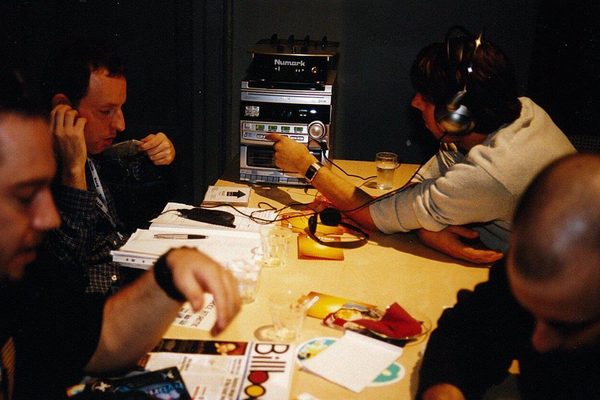
In Gary Smith’s account of ADE’s beginnings, Maria Jimenez and Peter Schmidt secured backing from John de Mol Sr. at Conamus, the Dutch music-promotion foundation. ADE started in 1996 as a small conference with a nighttime programme. The work of making that first meeting happen is an essential part of its history. [1]
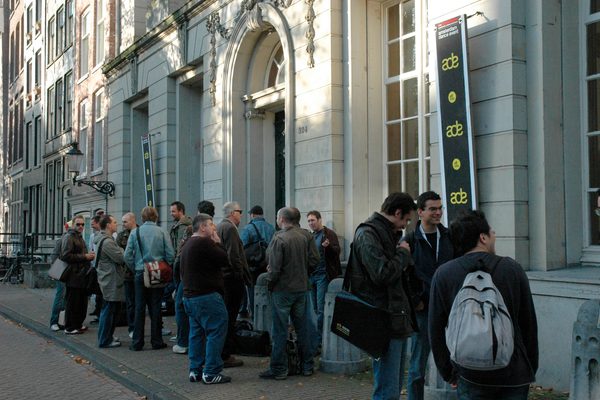
Smith places its first conference home at De Balie and recalls three nighttime venues. His account also offers an unusually practical origin for a lasting ADE habit: unreliable mobile reception sent delegates outside to make calls, where conversations developed. The gathering outside the entrance became part of the gathering itself. [3]
It is a small detail, but a revealing one. Before music-industry networking became a product with a platform and a password, somebody still had to step outside and speak to another person. In this history, the pavement deserves a place alongside the conference room. It gives the anniversary a human scale that the larger numbers cannot provide.
A conference grows, and the music opens out
Anna Knaup took over in 1997; the conference settled at Felix Meritis in 1998. ADE’s historical series describes an early emphasis on house widening to other genres, alongside the emergence of Dutch trance artists such as Tiësto and Armin van Buuren. Following renovations and the pandemic period, the conference returned to Felix Meritis in 2022. [2]
That broadening is useful context for 2026. A reader looking at ADE for the first time will find programmes that differ sharply in sound, scale and atmosphere. Trying to reduce them to a single musical identity would make the event easier to describe, but less interesting to understand. Its history contains expansion in both senses: more people, and more room for different kinds of music.
The structure helps explain this variety. The Amsterdam Dance Event Foundation is a nonprofit organisation; its programme connects a professional conference, education and a festival. Individual festival events are produced by participating organisers and venues. ADE supplies a shared framework, while much of the programming comes from those separate participants. [4]
The thirtieth anniversary takes shape
For 2025, ADE reported 600,000 visitors, nearly 3,500 artists, more than 1,200 events and over 300 locations. Those figures describe the previous edition. They establish how far the gathering has grown, but they are not a completed count for this October. [5]
The 1 September 2026 announcement confirmed more than 1,500 artists at that stage, including Âme, Ben Klock, CARISTA, HAAi, Hunee, Max Cooper and Todd Terry. It anticipated a final programme exceeding 3,300 artists. The dated announcement matters: an interim count and an organiser’s projection should not be presented as a final result. [6]
For the anniversary, ADE selected thirty events for its Icon Series, drawing from different programme strands. It is a useful starting point rather than a substitute for the full calendar. The selection allows a reader to follow the anniversary through performances, conversations and cultural projects, instead of treating “thirty” as a number printed above a line-up. [7]
The venues have their own anniversaries
Gashouder is part of this year’s story because the building itself is changing. ADE’s venue feature describes two years of structural renovations, including work on the roof and acoustics and a new basement for entrance and backstage facilities. The venue returns to the ADE programme during its pre-opening season. [8]
Elsewhere, Escape reaches forty years in 2026. Founded in 1986 by Dick and Ton Poppes, it predates ADE and remains in family hands. Meike Jentjens’ anniversary feature follows the less glamorous work of sustaining a club: investment, maintenance and responding to the people who actually walk through its doors. [9]
Club RAUM represents a more recent chapter. Opened in 2024, the queer-run space announced Nexus in its August profile as a new room planned for September, ahead of ADE. Its venue profile discusses changes to the room alongside its awareness team, no-photography policy and approach to consent. These are decisions about how a club is experienced as well as how it looks. [10]
Putting these venues side by side is a more useful anniversary exercise than ranking them. The practical questions are different in each case. How do you adapt an established building? How do you keep a business open across generations? How do you give a new community space to develop? In our reading, those questions make the city’s club history relevant to the present.
Opening night: three different ways into the anniversary
Jean-Michel Jarre is ADE’s guest of honour. His announced opening concert at AFAS Live on 21 October accompanies the fiftieth anniversary of Oxygène, while ADE celebrates its own thirty years. Jarre is also taking part in the conference. The two anniversaries give his invitation a precise historical connection. [11]
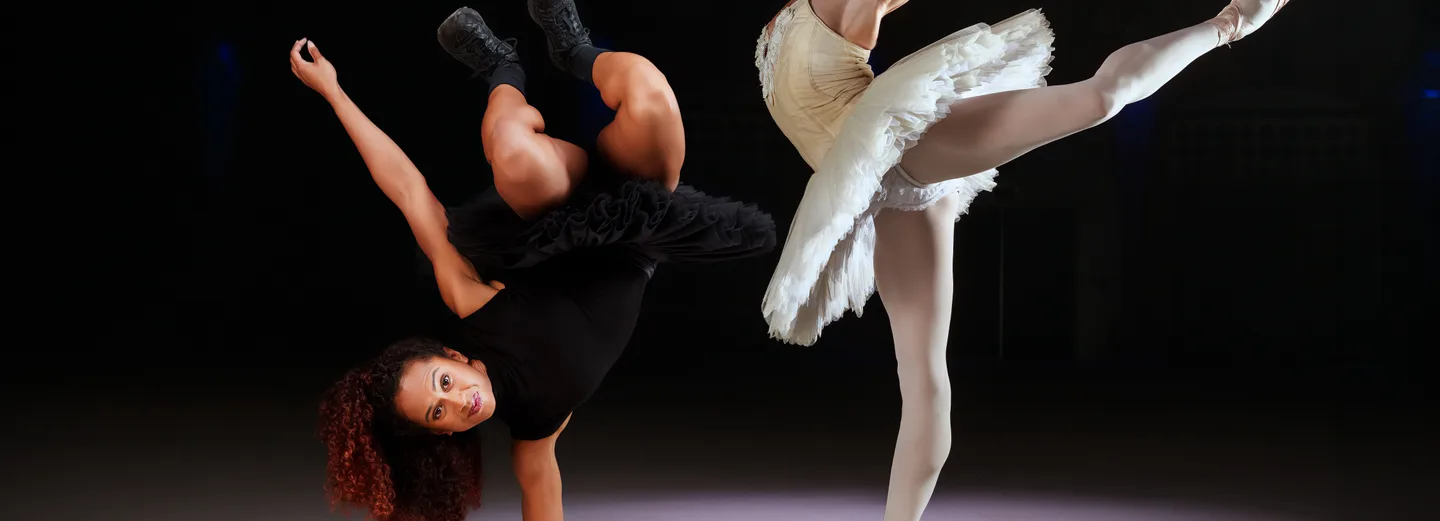
At Gashouder on the same day, Swan Lake Remixed brings together Dutch National Ballet and ISH Dance Collective, with Gashouder and XSAGA. The production combines ballet, hip-hop dance, electronic music and digital art. Direction is by Ernst Meisner and Marco Gerris, with music by Rik Ronner and lighting and video by Ben Kreukniet. [12]
Melkweg offers a third opening route: KYBBA with the Metropole Orkest, conducted by Simon Dobson, on 21 October. The concert also marks ten years of collaboration between the orchestra and Melkweg. Its Basshall-oriented programme brings a different musical emphasis to the opening celebrations. [13]
These three openings ask different things of a stage: an electronic concert, a dance production and an orchestra sharing the bill with a producer. What interests us is how each uses the live format. The anniversary becomes a chance to compare those decisions, from the role of the performer to the relationship between music, movement and the room.
EINDER beyond the five-day festival
Boris Acket and Making Waves present EINDER at De Centrale Markthal. The project runs from 21 October to 1 November. Its concert programme includes the Royal Concertgebouw Orchestra on 21 October, Elias Mazian on 22 October and Joep Beving on 29 October. Beving’s appearance is therefore after ADE’s five-day festival window. [14]
That last distinction is easy to lose in an anniversary preview. It is also useful: a cultural project connected to ADE can have a life beyond the Sunday closing date. Readers planning a trip should follow the individual programme rather than assume every associated performance fits inside the same five days.
Live electronics: image and sound as a shared performance
Colin Benders and Othernode are listed at Fabrique des Lumières on 22 October. The event describes Benders performing with modular synthesis and Othernode working with real-time image, light and projection. The shared audiovisual system is designed to be changed during the performance. [15]
STOOR offers another approach. The Sunday 25 October listing at Paradiso names Speedy J, Donato Dozzy, The Fear Ratio and Wallis. Its format is an improvised hardware jam, with stage, lighting and video directed by Karl Klomp. [16]
These are two performances we would place near one another in an editorial selection, because both invite attention to the process onstage. What does a musician decide in the moment? What does the visual artist answer? For SONS, that relationship is especially interesting: a live image can help a listener follow a performance when the production gives it a meaningful role.
Arts & Culture also takes listening into other settings. The September announcement includes Signals: Hearing a Changing Planet at ARTIS Planetarium, connecting satellite data, science and audiovisual work, and Minimal Collective’s Post-Space at Oude Kerk. The latter includes a sound system designed for the building’s acoustics. [17]
These projects offer a reason to look beyond the club-night timetable. A listening environment can change what a piece of music asks of its audience. A seated concert, a spatial work and a late-night dancefloor each create different conditions for attention. In a crowded festival week, that difference can be a good reason to choose an event.
The club programme: follow the curators
Dave Clarke Presents returns to Melkweg on 23 October with an anniversary edition. The listing includes Egyptian Lover, DJ Hell, Dasha Rush, Luke Slater, Rene Wise, DJ Stingray 313 and Mell G. Its programme offers a route through several generations of club music. [18]
At WestWeelde on 23 October, fabric x Loud Contact lists Jeff Mills, Helena Hauff, FJAAK, Gabrielle Kwarteng, Binh, Quest and Quelza among its artists. Following a promoter’s selection is one way to make a very large programme manageable: the combination of names gives a more specific starting point than a genre label alone. [19]
For a radio-minded route, Breakfast Club teams up with Kiosk Radio for The Sound of Belgium at Pllek on 23 October. The announced artists include AliA, CJ Bolland, DC Salas, Lola Haro and Nosedrip. It is a concrete example of a radio platform taking part in the festival’s club programme. [20]
What connects these choices is the presence of a selector: a DJ, a club institution or a radio with a recognisable point of view. Their programmes invite us to hear relationships between artists. That is the part of a large line-up we find useful for radio: what one sound can tell us about the next.
ADE Pro: independence is a practical question
ADE Pro’s announced themes for 2026 are market consolidation and the future of independence, the relationship with big technology, and collective action. Brazil, the Middle East and North Africa, and Sub-Saharan Africa are its focus regions. The June announcement connects those themes with artist-led businesses and regional scenes. [21]
For an independent label, promoter or broadcaster, these topics meet everyday decisions. Where does an audience find you? Who controls distribution? What can you afford to produce, and which partnership helps you keep doing it? The useful conference conversation is the one that stays close enough to those decisions to matter once the badge has been put away.
Music & Machines, scheduled for 21 October at Rosewood Amsterdam, brings together Jean-Michel Jarre, Lady Starlight, JakoJako and Armin van Buuren, moderated by Meike Jentjens. Its subject is the relationship between artists and technology, including how instruments and production tools shape creative work. [22]
Artists on AI is listed for 23 October at Felix Meritis, with Mathame, BT and Portrait XO and Dave Clarke as moderator. The session addresses the effects of AI on artists’ work, authorship and livelihoods. [23]
The anniversary also has a conversation devoted to ADE itself. The 30 Years of ADE session is scheduled for 22 October at Felix Meritis, with figures including Anna Knaup, Maria Jimenez, Richard Zijlma and Gary Smith, and Dave Clarke moderating. Its stated purpose is to revisit the event’s development and the lessons learned. [24]
Who gets to take part next?
ADE Lab Discovery provides a practical opening for newcomers in 2026. The programme is free after registration, running Wednesday to Friday at Lab Village in Amsterdam’s Westerpark. Open sessions, the Gear Test Lab and cultural experiences sit alongside the separate, more intensive Lab On Track pathways. [25]
ADE and VibeLab are also preparing the Nighttime Culture Index for launch at ADE Pro this October. It examines cultural vitality across Amsterdam, Lagos, New York, São Paulo, Seoul and Sydney through a public dashboard and report. It is intended as a cultural measure rather than an economic-impact study. [26]
The combination is worth watching. Education addresses who can enter the scene; the index asks how the conditions around that scene can be understood. Neither project’s value can be settled in advance by an anniversary announcement. Their usefulness will depend on what people can learn from them and do with them afterwards.
What SONS is looking for in this edition
From our position between Galicia and Ibiza, three threads stand out: places that sustain a scene, performances that make live production interesting to watch, and platforms that help music travel. They provide a reason to read the anniversary across its different programmes. The history tells us how the meeting grew; the 2026 edition lets us examine what the meeting wants to make possible now.
The most interesting legacy of a thirtieth anniversary may be the work that continues after it. A club still needs a programme in November. A young artist still needs somewhere to play. A radio still needs to find music worth sharing. ADE’s five days bring those tasks into the same calendar. What follows them will be another chapter.
Sources & programme links · 26 official references
- Gary Smith · Origins (25 August 2026)
- Gary Smith · Growth and conference venues (9 September 2026)
- Gary Smith · From De Balie to a global meeting point (30 September 2026)
- ADE · Organisation and festival structure
- ADE · Official 2025 recap
- ADE · Second-wave announcement (1 September 2026)
- ADE · 30 YEARS Icon Series (16 September 2026)
- ADE · Gashouder, by Meike Jentjens
- ADE · Escape at forty, by Meike Jentjens
- ADE · Club RAUM, by Meike Jentjens
- ADE · Jean-Michel Jarre, guest of honour
- ADE · Swan Lake Remixed: production and credits
- ADE · KYBBA & Metropole Orkest: event listing
- ADE · EINDER: exhibition and concert dates
- ADE · Colin Benders + Othernode: event listing
- ADE · STOOR Live: Sunday event listing
- ADE · Arts & Culture announcement (17 September 2026)
- ADE · Dave Clarke Presents: event listing
- ADE · fabric x Loud Contact: event listing
- ADE · Breakfast Club / Kiosk Radio: event listing
- ADE · Pro themes and focus regions (25 June 2026)
- ADE · Music & Machines: current event listing
- ADE · Artists on AI: current event listing
- ADE · 30 Years of ADE: current event listing
- ADE · Lab Discovery: programme and registration
- ADE / VibeLab · Nighttime Culture Index
Published 5 October 2026. This preview is based on ADE’s official history, announcements and event listings. Historical recollections are attributed; the selection and commentary are by SONS. Names and dates were checked against the programme available on publication. Photograph credits appear with each image.
Music, stories or ideas to share with SONS? Get in touch.
info@sonsibizaradio.com@sons.radio · @sonsvigroove
